Balto Wasn’t the Only Hero: The Untold Story of the 1925 Serum Run
One famous dog. Hundreds of courageous paws. And a desperate race against time that changed history.
Imagine waking up to a temperature of 40 degrees below zero.
The wind is howling. Snow is blowing so hard you can barely see a few feet ahead. Somewhere in the distance, an entire town is waiting for medicine that could mean the difference between life and death.
No highways. No delivery trucks. No helicopters ready to swoop in and save the day.
And certainly no Amazon Prime promising delivery by tomorrow.
Instead, the fate of a community rests on something extraordinary.
Dogs.
Not just any dogs, either. These were hardworking sled dogs who would travel through some of the harshest conditions imaginable, guided by people who understood that turning back wasn’t much of an option.
You’ve probably heard of Balto, the famous sled dog who helped save Nome, Alaska, during the 1925 diphtheria outbreak.
Maybe you remember the animated movie. Perhaps you’ve seen pictures of his statue in New York City’s Central Park.
But here’s something that might surprise you.
Balto was not the only hero. He wasn’t even the dog who traveled the greatest distance.
And what happened to him after his incredible rescue mission might be one of the most touching chapters of his entire story.
So grab your coffee, settle in with your favorite four-legged companion, and let’s discover the real story behind one of history’s most famous dogs.
Because this story has everything: courage, determination, controversy, heartbreak, and a reminder of just how remarkable our canine companions can be.
Prefer to watch the story? Watch Balto’s Incredible True Story on YouTube →
1. The 1925 Serum Run: When an Entire Town Needed a Miracle
In January 1925, the remote town of Nome, Alaska, faced a terrifying emergency.
A deadly infectious disease called diphtheria was spreading, threatening the town’s children and surrounding communities.
Today, many of us recognize diphtheria as a disease that routine childhood vaccination helps prevent. But in 1925, it was a frightening and potentially fatal illness.
The town’s physician, Dr. Curtis Welch, knew that without a fresh supply of diphtheria antitoxin, more lives could be lost.
Unfortunately, there was one enormous problem.
Nome was practically cut off from the rest of the world.
Its harbor was frozen. Roads connecting the town to the outside world didn’t exist. Aircraft were still relatively new, and attempting to fly through Alaska’s brutal winter weather was considered extremely dangerous.
The nearest available supply of antitoxin would have to travel by train to Nenana, Alaska.
From there?
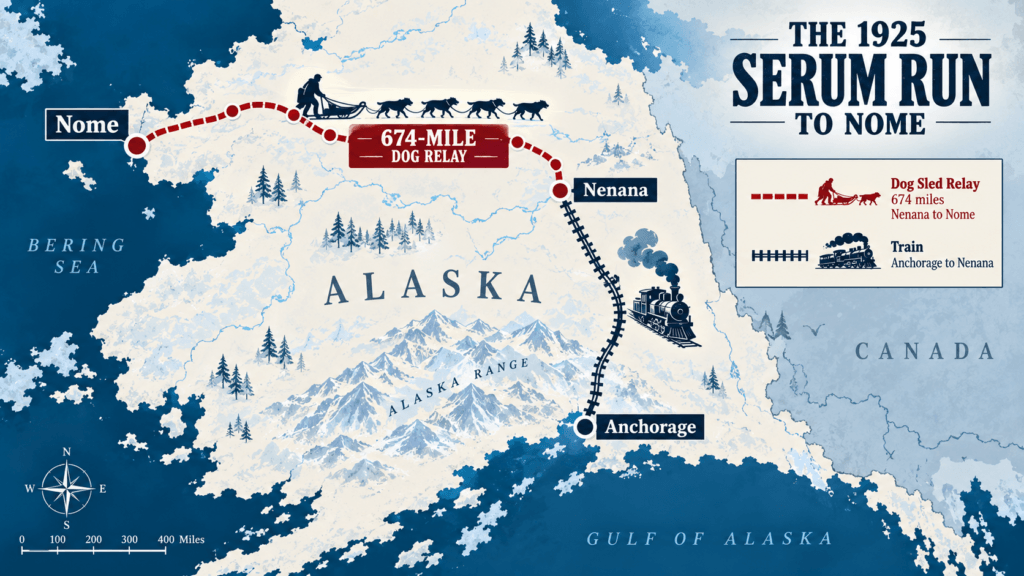
674 miles of frozen wilderness stood between the medicine and the people who desperately needed it.
And that’s where the dogs came in.
A relay was organized using 20 mushers and more than 150 sled dogs. Each team would carry the precious medicine across a portion of the route before passing it to the next.
Think of it as the world’s most important relay race.
Except instead of passing a baton, they were carrying lifesaving medicine.
And instead of running around a comfortable track, they were battling blizzards, dangerous ice, fierce winds, and temperatures that could plunge to 50 degrees below zero.
There would be no trophies waiting at the finish line.
Just families hoping their children would survive.
Why sled dogs were the perfect choice
Sled dogs had been essential to transportation in Alaska long before the 1925 emergency.
They were bred and trained for endurance, teamwork, and navigating difficult terrain.
A good lead dog needed more than speed.
It needed intelligence, confidence, responsiveness, and the ability to make decisions when conditions became dangerous.
And here’s something every dog mom can appreciate.
You know those moments when your dog absolutely refuses to go in the direction you’ve chosen?
Sometimes they’re simply being stubborn.
But sometimes, dogs notice something we don’t.
For sled dogs traveling across unstable ice or through blinding snow, that awareness could be lifesaving.
These weren’t ordinary pets out for a snowy afternoon adventure.
They were experienced working animals, and the people of Nome were counting on them.
2. Meet Balto: The Dog Who Became a Legend
Balto was a dark-coated sled dog from Leonhard Seppala’s kennel.
Although he’s commonly called a Siberian Husky, modern genetic research suggests his ancestry was more varied than that simple label implies.
And unlike some of the kennel’s celebrated racing dogs, Balto wasn’t initially considered its greatest star.
In fact, Seppala didn’t regard him as one of his premier racing leaders.
Which makes what happened next even more remarkable.
Sometimes the dog nobody expects to shine turns out to be exactly the dog needed when the moment arrives.
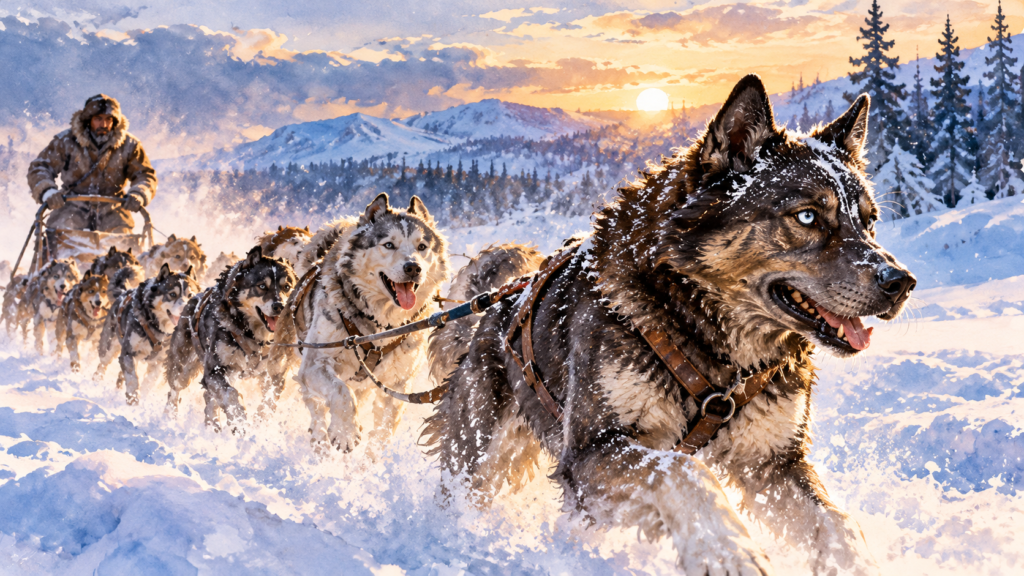
Balto was selected to lead musher Gunnar Kaasen’s team during the final portion of the serum relay.
By then, the medicine had already passed through the hands and paws of numerous mushers and across hundreds of miles of dangerous terrain.
But the journey wasn’t over.
Kaasen and his dogs still faced severe weather, limited visibility, and an exhausting final stretch.
At one point, the conditions were so difficult that navigating the trail became a serious challenge.
Balto continued leading the team through the storm.
Kaasen’s team covered approximately 53 miles, including the final stretch into Nome.
And on February 2, 1925, the medicine finally arrived.
The entire relay had taken approximately five and a half days.
Just imagine that moment.
After hundreds of miles, freezing temperatures, sleepless nights, and countless anxious families waiting for news, the antitoxin was finally where it needed to be.
Balto and Kaasen became national heroes.
Newspapers celebrated their achievement. Their photographs appeared across the country.
And Balto’s name became permanently associated with one of the greatest canine rescue efforts in American history.
But there was another dog whose contribution deserves just as much attention.
Possibly more.
3. Balto vs. Togo: The Hero You Might Not Know
Here’s the part of the Balto story that surprises many dog lovers.
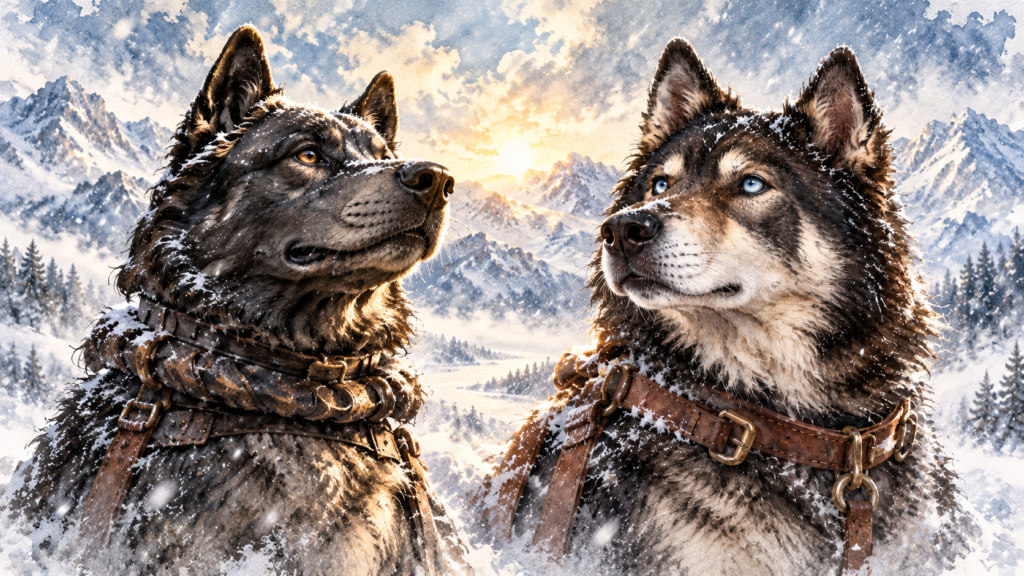
While Balto led the final team into Nome, another remarkable sled dog named Togo traveled a much greater distance during the rescue effort.
Togo was an experienced Siberian Husky and the trusted lead dog of Leonhard Seppala.
He was also approximately 12 years old when the serum run took place.
Twelve!
Now, I don’t know about you, but when I think of a 12-year-old dog, I picture a comfortable bed, a few leisurely walks, and perhaps a strongly worded complaint if dinner is five minutes late.
Togo apparently had other plans.
He and Seppala traveled roughly 260 miles in their overall mission, including the journey to meet the incoming medicine and carry it westward.
Their route included some of the most dangerous conditions of the entire rescue.
One particularly terrifying section took them across the frozen Norton Sound, where unstable sea ice, open water, and violent weather created extraordinary risks.
According to historical accounts, Togo demonstrated incredible intelligence and determination during these crossings.
He wasn’t simply following commands.
He was helping his team survive.
So why did Balto become more famous?
Partly because Balto was the lead dog on the final team that brought the serum into Nome.
He was there at the dramatic finish.
And as anyone who has ever watched a sporting event knows, the person—or in this case, the dog—who crosses the finish line often gets the biggest headline.
But the victory belonged to the entire team.
Was Balto really a hero?
Absolutely.
The fact that Togo traveled farther doesn’t diminish Balto’s accomplishment.
Balto and his teammates faced dangerous conditions and successfully completed their portion of the relay.
Togo and his team demonstrated extraordinary endurance over a much longer route.
And dozens of other dogs carried the same precious cargo across the frozen Alaskan wilderness.
EVERY team mattered.
If even one crucial handoff had failed, the medicine could have been delayed.
There’s a lesson here that goes far beyond sled dogs.
Being the most famous doesn’t necessarily mean being the most important. And being overlooked doesn’t mean your contribution didn’t matter.
That’s something worth remembering in a world that tends to celebrate whoever gets the most attention.
Woofy would probably have a different interpretation.
“Personally, I think every dog involved deserved a statue. And snacks. Mostly snacks.”
Fair point, Woofy.
Fair point.
4. What Happened to Balto After the Serum Run? The Unexpected Second Rescue
You might assume that after saving lives and becoming a national celebrity, Balto enjoyed a comfortable retirement.
A warm bed.
Plenty of treats.
Perhaps a personal chef and someone assigned to scratch behind his ears.
Unfortunately, that’s not how his story unfolded.
Following the serum run, Balto and members of his team toured the United States, appearing before audiences who wanted to see the famous dogs.
But fame can be a strange thing.
Eventually, Balto and six surviving teammates ended up in a Los Angeles dime museum, where they were exhibited under poor conditions.
These dogs had endured Arctic storms and helped carry lifesaving medicine across Alaska.
Now they were being displayed for paying spectators.
It’s heartbreaking to imagine.
And this is where Balto’s story takes another remarkable turn.
The people of Cleveland come to the rescue
In 1927, a Cleveland businessman named George Kimble discovered Balto and his teammates in Los Angeles.
Disturbed by their circumstances, he decided something had to be done.
He arranged to purchase the dogs, but the money had to be raised quickly.
The people of Cleveland answered the call.
Children contributed money. Businesses donated. Ordinary citizens came together to help bring the famous sled dogs to a better home.
Within just 10 days, the fundraising effort succeeded.
On March 19, 1927, Balto and his six teammates arrived in Cleveland to a hero’s welcome.
They were celebrated with a parade and eventually made their home at the Brookside Zoo.
Think about that for a moment.
In 1925, Balto helped carry medicine to save people he had never met.
Two years later, people who had never met Balto came together to save him.
If that doesn’t make you feel something, you might want to check whether your heart is temporarily out chasing squirrels.
Balto spent the remainder of his life in Cleveland, where he became a beloved local celebrity.
He died in 1933.
His preserved remains are now displayed at the Cleveland Museum of Natural History, where visitors can still learn about his extraordinary life.
And his legacy doesn’t end there.
The famous Balto statue in Central Park
If you’ve visited New York City’s Central Park, you may have passed a bronze statue of a determined sled dog standing proudly on a rocky outcrop.
That’s Balto.
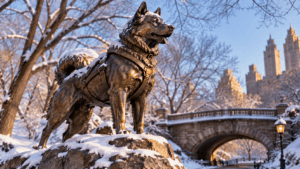
The statue was dedicated in December 1925, less than a year after the serum run.
Its inscription honors the sled dogs’ endurance, fidelity, and intelligence.
I love that.
Not simply speed.
Not fame.
Not winning.
Endurance. Fidelity. Intelligence.
Qualities that describe so many of the dogs we’ve loved throughout our lives.
Of course, most of our dogs demonstrate their endurance by waiting beside the refrigerator until someone opens the cheese drawer.
But the devotion?
That’s very real.
Even Balto’s DNA has a story to tell
Here’s a fascinating modern twist.
In 2023, scientists published research examining Balto’s DNA using a sample from his preserved remains.
The study offered insights into his ancestry and the genetic characteristics of working sled dogs from his era.
Researchers found that Balto had a diverse genetic background and characteristics associated with the hardy working dogs of his time.
More than 90 years after his death, Balto was still helping people learn something new.
Not bad for a dog whose original job description probably didn’t include becoming a scientific research subject.
5. What Balto’s Story Teaches Us About Dogs, Courage, and Everyday Heroes
It’s easy to look at Balto, Togo, and the other sled dogs and think their story belongs to another world.
After all, most of us aren’t navigating Arctic storms or transporting emergency medicine through frozen wilderness.
Our dogs are more likely to be navigating the complicated journey from the couch to the kitchen.
Usually because someone opened a snack bag.
But the qualities that made those sled dogs extraordinary aren’t completely unfamiliar.
We see smaller versions of them in our own dogs every day.
Loyalty isn’t always loud
Sometimes loyalty looks like a dog running through a blizzard.
Other times, it looks like a dog quietly following you from room to room.
Or resting beside your chair when you’ve had a difficult day.
Or greeting you at the door as though your 20-minute trip to the grocery store was a six-month expedition.
Dogs have a remarkable way of making us feel that we matter.
And while their motivations and personalities vary, the bond between humans and dogs can be incredibly powerful.
Every dog has something special to offer
Balto wasn’t initially the most celebrated dog in his kennel.
Togo was older when he undertook his legendary journey.
And the many other dogs who participated in the serum run had different strengths, responsibilities, and experiences.
Yet they all contributed to something bigger than themselves.
That’s worth remembering when we look at our own dogs.
Not every dog will become a service dog, a search-and-rescue hero, or a championship athlete.
Some are shy.
Some are stubborn.
Some are wonderfully goofy.
Some require a little extra patience.
And some seem to believe their primary responsibility is supervising the household from the most comfortable pillow.
But every dog deserves the opportunity to be understood, appreciated, and loved for who they are.
What we can do for the dogs who depend on us
 Balto’s story, Togo and all the sled dogs too, isn’t just about what dogs can do for people.
It’s also about what people owe the animals who depend on them.
Those Cleveland residents didn’t have to rescue Balto.
They could have admired his accomplishments, read the newspaper stories, and moved on.
Instead, they acted.
And we can carry a little of that spirit into our own lives.
- Support animal rescues and shelters. Even small donations, supplies, or volunteer hours can make a difference.
- Learn your dog’s individual needs. Physical exercise, mental enrichment, rest, and companionship all contribute to a dog’s well-being.
- Celebrate your dog’s strengths. Not every dog enjoys the same activities, and that’s perfectly fine.
- Share the stories of overlooked dogs. Working dogs, rescue dogs, shelter dogs, and everyday companions all have stories worth telling.
- Make time for the dog in front of you. Sometimes the most meaningful thing you can offer is your attention.
And perhaps most importantly, remember that our dogs don’t need to perform extraordinary acts to deserve extraordinary love.
They already give us so much simply by being themselves.
The Legacy of Balto: One Famous Name, Hundreds of Heroes
More than a century after the 1925 serum run, Balto’s name still captures our imagination.
His statue stands in Central Park.
His story appears in books, movies, museums, and classrooms.
And his incredible journey continues to introduce new generations to the courage of working dogs.
But the most meaningful way to remember Balto might be to remember that he wasn’t alone.
There was Togo, the experienced veteran who traveled an extraordinary distance.
There were the other lead dogs, teammates, and mushers who carried the medicine from one remote checkpoint to the next.
There were the people waiting anxiously in Nome.
And years later, there were the compassionate strangers in Cleveland who decided a hero deserved rescuing, too.
That’s what makes this story so powerful.
It’s not really about one dog becoming famous.
It’s about what can happen when determination, teamwork, compassion, and a whole lot of paws come together.
And maybe that’s why these stories stay with us.
Because underneath all the history, danger, and adventure is something every dog lover already understands.
Dogs have an extraordinary ability to leave paw prints on lives they may never fully understand.
Balto did it across 674 miles of Alaskan wilderness.
Our own dogs do it right here at home.
One tail wag, one comforting presence, and one unforgettable memory at a time.
Click here to Watch the incredible story of Balto on YouTube
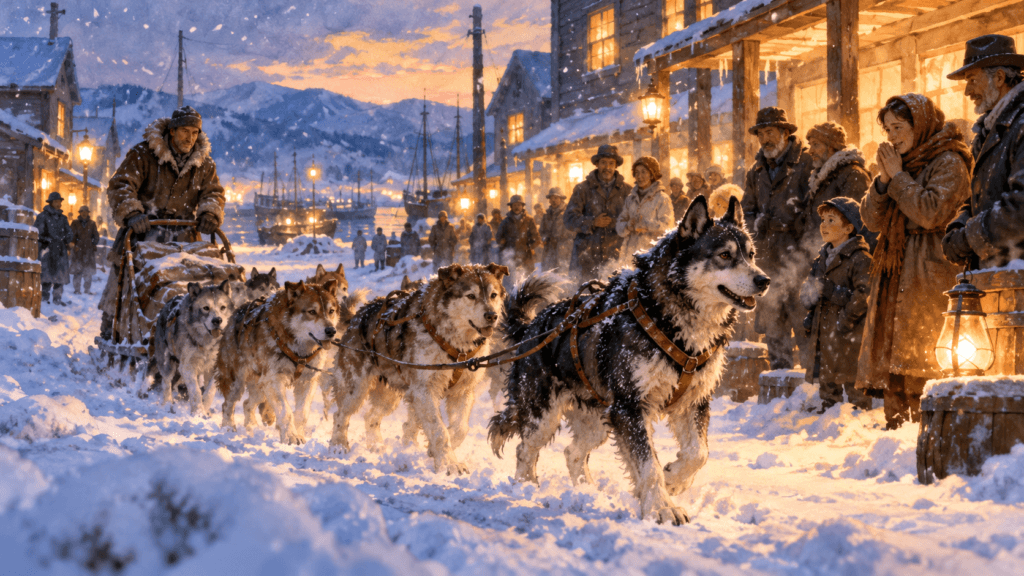
Want to experience the snowstorms, danger, and dramatic race to save Nome?
We’ve brought this remarkable chapter of canine history to life in our Woofy Guru YouTube video about Balto and the 1925 Serum Run.
It’s a chance to see the journey unfold, discover the dogs behind the headlines, and appreciate just how extraordinary this rescue mission really was.
Watch Balto’s Incredible True Story on YouTube →

And now I’d love to hear from you.
Do you think Balto deserved all the fame, or should Togo and the other sled dogs be just as well known?
Tell me in the comments!
And if you enjoyed discovering this piece of dog history, save this article, share it with another dog lover, and explore more incredible canine stories here at Woofy Guru.
Because every dog has a story.
And some stories deserve to be told for generations.
Stay Woofy! 🐾

Dog First. Everything Else… Maybe.
Recommended Reading
- My Human Is My Best Friend: Why Your Dog Knows You’re Their Person
- Your Dog Is Talking—Are You Listening? 9 Body Language Signs Explained
- Doggy Daycare Buses: Back to School Has Gone to the Dogs
- How to Celebrate Halloween With Your Dog: 15 Fun, Safe & Spooky Ideas