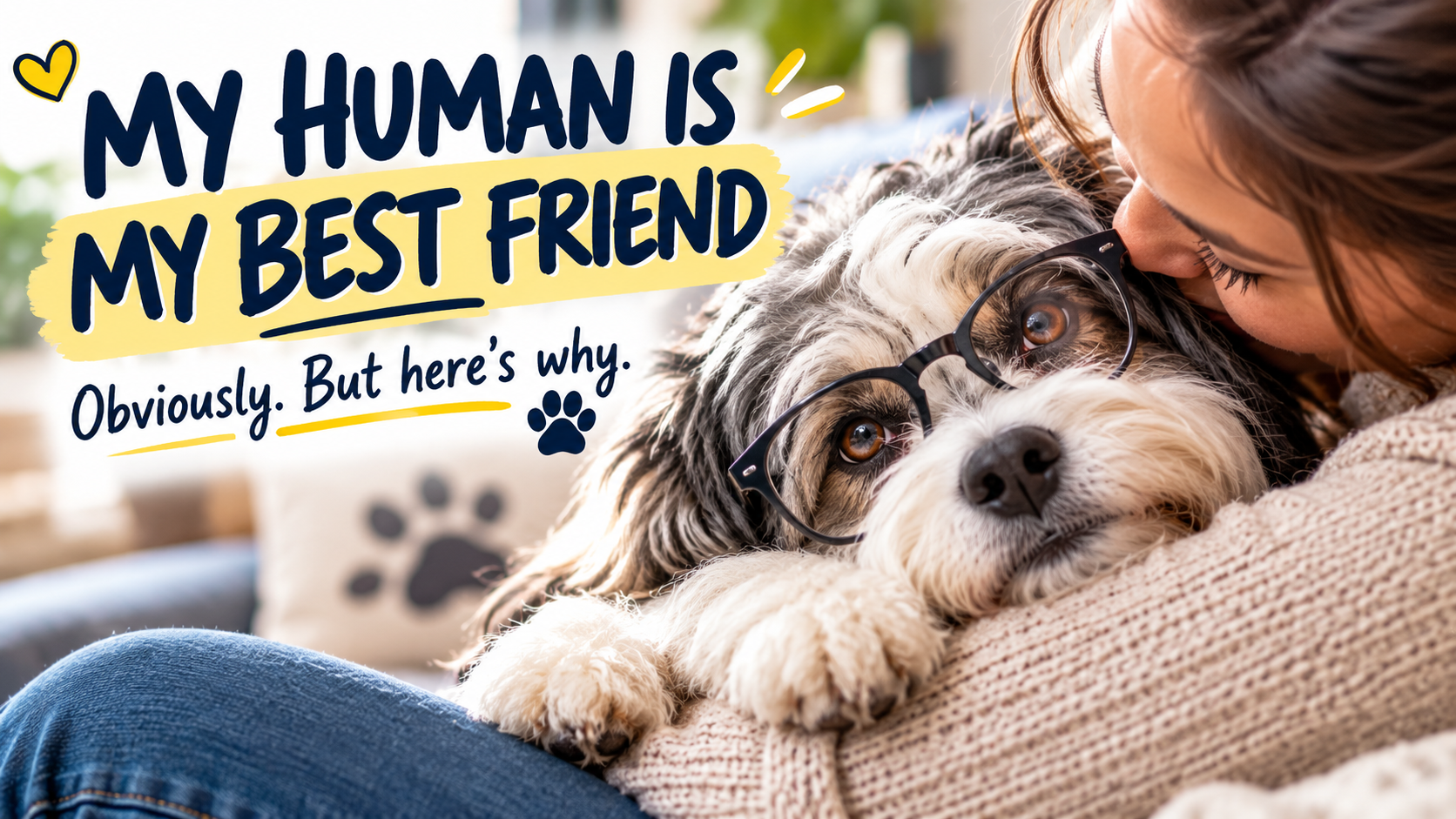
If you’ve ever wondered “why is my dog so attached”, why your dog follows you into rooms they have absolutely no business being in, or whether your dog really thinks you’re someone special…
Pull up a couch cushion.
Apparently, researchers have been studying dogs.
Which seems unnecessary, but here we go.
Yes, Your Dog Really Can Become Attached to You
First things first: your dog isn’t hanging around only because you know where the food lives.
Important advantage?
Absolutely.
Entire relationship?
Rude.
Researchers have used versions of the same attachment tests originally developed for human children and found that dogs show attachment behaviors toward their people. Dogs seek proximity, react to separation and behave differently when reunited with their person compared with a stranger.
In other words, dog attachment to an owner is a real thing.
You become part of your dog’s definition of safe, familiar and home.
And that bond isn’t built during one magical Disney moment.
It’s built while you fill the water bowl.
When you scratch the exact spot behind the ear.
When you say, “Who’s a good dog?” despite already knowing the answer.
When you come home.
Again.
And again.
And again.
That’s the important part.
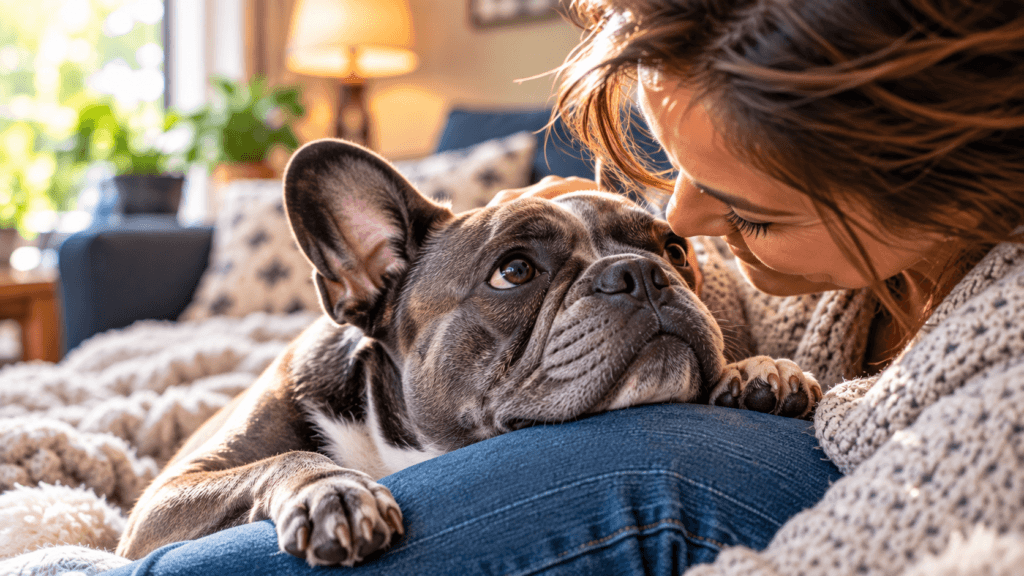
Your Scent Says: That’s My Human
Let’s discuss your smell.
Don’t panic.
To you, you probably smell like shampoo, laundry detergent and whatever you had for lunch.
To your dog?
You smell like you.
And apparently, we’re fans.
Researchers at Emory University trained dogs to stay awake and still inside an MRI machine while they smelled several different scents, including familiar and unfamiliar humans and dogs.
The dogs’ reward-related brain area responded most strongly to the scent of a familiar human.
Not another dog.
A human.
I’d like a moment to point out that we beat the dogs.
I’m not saying there’s a trophy.
I’m saying there should be a trophy.
So when your dog sleeps on your sweatshirt or curls up on your side of the bed after you get up, don’t immediately assume criminal activity.
Although the sock situation remains under investigation.
Your scent is familiar.
And familiar can feel good.
Which means that pile of laundry you’ve been meaning to fold?
To your dog, it may basically be a scented comfort collection.
You’re welcome.
Your Dog Knows Your Voice
You talk to us constantly.
You narrate your day.
You tell us you’re “just going to the store.”
You explain why we cannot possibly need another treat.
You occasionally tell us personal things that would destroy your reputation if we could operate a phone.
Your secrets are safe.
Probably.
But dogs aren’t just hearing random noises when humans speak.
Researchers studying dogs’ brains found that dogs can process information about both words and intonation, and reward-related brain activity was strongest when praise words were paired with praising vocal tones.
Translation: If you’re going to tell me I’m magnificent, put some feeling behind it.
Do not say “good boy” in the same voice you use to read the electric bill.
We know the difference.
Dogs can also connect a familiar person’s voice with that person’s face. In one study, dogs looked longer when the voice and face they were shown didn’t match—suggesting they had expectations about who should go with that voice.
So yes.
I know your regular voice.
Your phone voice.
Your “WHAT DO YOU HAVE IN YOUR MOUTH?” voice.
And that ridiculously sweet voice you claim you don’t use when other people are around.
That one’s my favorite.
🐾 Want the Dog’s Version?
Apparently, science has been studying why dogs get so attached to their humans.
I could’ve saved everyone some time.
Watch My Human Is My Best Friend and hear what this whole
human-dog bond looks like from my side of the couch.
Then come back — we still need to discuss why your dog keeps staring at you. 👀
You’re Your Dog’s Safe Place
This may be one of the sweetest reasons your dog gets attached to you.
Researchers call it the secure base effect.
Basically, dogs can feel more confident exploring or working on something when their person is nearby.
In one experiment, dogs spent more time working at a food-filled puzzle when their owner was present than when the owner was absent.
Here’s the best part:
The human didn’t even have to help.
They could just sit there.
Doing nothing.
Which, as a dog, I find both comforting and extremely on-brand for humans.
Your presence itself mattered.
You may notice this when your dog looks back at you in a new place.
Or moves closer during something uncertain.
Or checks your face at the veterinarian while you say, “It’s okay!” in the least convincing voice you’ve ever used.
Sometimes your dog doesn’t need you to fix everything.
Sometimes knowing their person is there is enough.
Woofy’s Wisdom
 You don’t have to make every scary noise disappear.
You don’t have to make every strange situation perfect.
Sometimes being calm, familiar and nearby is the job.
Finally, a responsibility humans are qualified for.
Why Does My Dog Stare at Me?
Ah.
The stare.
You look up from the couch.
Your dog is already watching you.
How long has this been happening?
Unknown.
Should you be concerned?
Depends.
Are you holding cheese?
Because let’s not ignore the obvious explanation.
But relaxed eye contact between dogs and their people may also play a role in bonding.
In a well-known study, longer mutual gazing between dogs and their owners was associated with increases in oxytocin—the hormone involved in social bonding—in both dogs and people. Researchers did not see the same pattern with human-raised wolves.
So when your dog gives you that soft, relaxed look from across the room…
There may actually be some biology behind the moment.
Or dinner is six minutes late.
You’ll have to read the room.
One important distinction: relaxed eye contact between you and a dog who knows and trusts you is very different from fixing an unfamiliar dog with a hard stare.
Please don’t wander around staring deeply into random dogs’ eyes because Woofy told you bonding hormones were involved.
I have enough liability.
Your Dog Notices When Something Is Different With You
Ever had one of those days when you’re upset and suddenly your dog appears?
No invitation.
No questions.
Just…
dog.
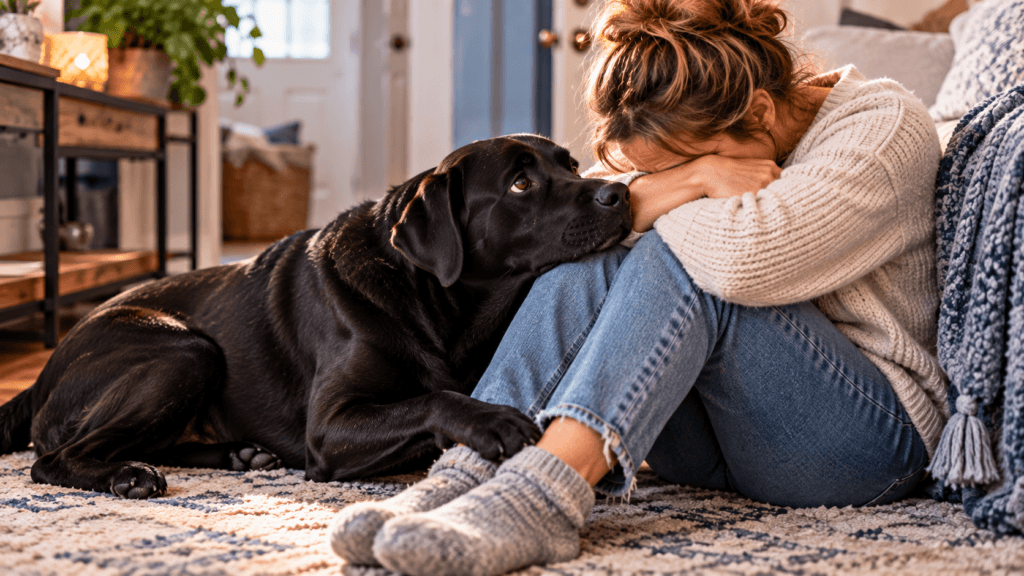
Researchers have found that dogs respond differently when humans appear distressed.
In one experiment, dogs were more likely to orient toward and approach a person pretending to cry than when the person was talking or humming. Dogs sometimes approached the crying stranger too—not only their owner.
Does that prove your dog understands sadness exactly the way another human does?
No.
Science has to be careful about that.
Woofy apparently does too.
What researchers can say is that dogs notice human emotional signals and may respond with behaviors such as approaching, sniffing, nuzzling or licking.
You may recognize the home version.
The head on your knee.
The paw appearing on your leg.
The full-body lean that says:
“I don’t know what happened, but apparently we’re handling it together.”
Honestly?
Not our worst quality.
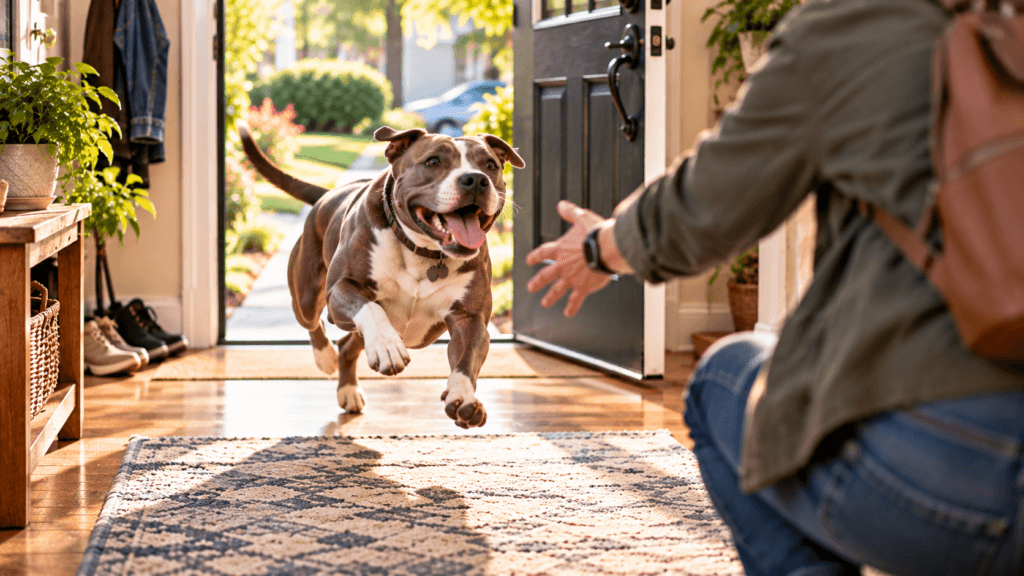
Why Your Dog Acts Like You Were Gone for Seven Years
You went to Target.
You were gone two hours.
You return.
Your dog reacts like you have just survived a three-year expedition through Antarctica.
Finally, science has investigated this highly reasonable behavior.
Researchers recorded dogs left at home for 30 minutes, two hours and four hours.
The dogs didn’t show major behavioral differences while their owners were gone, but their reunion behavior changed after longer separations. After two- and four-hour absences, dogs showed more greeting behavior and initiated more physical contact than they did after only 30 minutes apart.
Scientists call this increased reunion behavior.
I call it:
Maximum Missing You.
After two hours, we’ve reached capacity.
There is no higher setting.
You left.
We noticed.
Please put your keys down.
One Serious Woofy Note
Being happy to see you is normal.
Following you around can be normal too.
But extreme distress when left alone is different from simply being attached.
If your dog panics when you leave, barks continuously, destroys doors or windows, has accidents despite being house-trained, or seems unable to settle, talk with your veterinarian or a qualified canine behavior professional.
Being attached to you should feel safe.
Missing you shouldn’t feel terrifying.
So… Does My Dog See Me as Their Best Friend?
Science cannot put your dog in a chair and ask:
“On a scale of 1 to 10, please rank your human friendship experience.”
Which is unfortunate because I have notes.
But the research does tell us quite a bit.
Dogs recognize their humans.
We know your scent.
We recognize your voice.
Your presence can make us feel more secure.
We notice when something changes with you.
We seek you out.
We react when you leave.
And we definitely notice when you come back.
So if you’re wondering, does my dog see me as their best friend?
I can’t tell you exactly what word exists inside your dog’s head.
But I can tell you this:
You’re not just the person filling the bowl.
You’re the smell of home.
The voice from the other room.
The footsteps we recognize.
The person we check on.
The door we’re waiting to hear open.
You’re our person.
And yes…
we noticed you ate that sandwich without sharing.
Nobody’s perfect.
Want the Dog’s Version?
You’ve read the science.
Now let me explain the relationship properly.
👉 Watch: My Human Is My Best Friend (And Here’s Why) on the Woofy Guru YouTube channel.

I’ll explain exactly why humans become our favorite people—from my side of the couch.
And if your dog has already made it painfully obvious that you are their person, tell me in the comments:
What’s the one thing your dog does that says, “Yep. You’re mine”?
Then subscribe to Woofy Guru on YouTube for more dog behavior, dog POV humor and life according to the creature who actually runs your house.
Stay Woofy. 🐾

Recommended Reading