
Woofy Guru wisdom for dog moms who know: a tired brain = a happy dog
Let me guess, friend.
Your dog has plenty of toys… regular walks… a cozy bed… and still somehow manages to look at you like, “Is this all there is?”
Here’s the truth most of us weren’t taught:
🐾 Physical exercise is only half the equation.
🐾 Dogs need mental stimulation just as much as they need walks.
And when they don’t get it? They invent their own entertainment. (Spoiler: it can involve destroying your favorite couch pillow, other destruction, noise, or chaos.)
If you’ve ever said, “Why are you acting like this?” — this article is your answer. Let’s walk through the 7 biggest signs your dog’s brain is bored and what to do about it (without overthinking).
 Disclosure: This post may affiliate links, which means I may earn a small commission at no extra cost to you. You can read my full disclosure here.
1. Destructive Chewing (AKA: The Furniture Isn’t Safe)
If your dog is chewing shoes, pillows, baseboards, or anything they know they shouldn’t… this isn’t rebellion.
It’s mental boredom.
Dogs are natural problem-solvers. When their brain has nothing to do, they’ll chew, shred, dig, or “redecorate” to release that pent-up mental energy.
Woofy Guru Tip 🐶
Before assuming “bad behavior,” ask:
What has my dog been asked to THINK about today?
Try:
- Puzzle toys
- Stuffed enrichment toys
- Scatter feeding instead of bowl feeding
- Short training games (5 minutes works!)
2. Excessive Barking or Whining (For No Clear Reason)
Yes, some dogs are chatty.
But nonstop barking at nothing? That’s often a bored brain seeking stimulation.
Mental under-stimulation creates frustration, and frustration finds a voice.
Your dog isn’t being dramatic (okay, maybe a little). They’re saying:
“I need engagement, not another walk around the same block.”
Try:
- Nose work games at home
- Treat hide-and-seek
- Teaching a new trick just for fun
- Interactive toys that require problem-solving

3. Restlessness & Pacing Indoors
You know the look.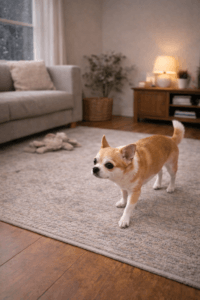
They can’t settle. They pace. They flop. They sigh dramatically. They stare at you like you’re withholding something important.
That’s mental energy with nowhere to go.
Physical exercise alone doesn’t always calm this — especially for smart breeds and older dogs who don’t need miles of walking.
Try:
- Calm brain games after walks
- Lick mats (great for soothing the nervous system)
- Short “think sessions” instead of more movement
If your dog shows a few of these signs, mental enrichment can make a real difference.
👉 See how brain training supports calmer, happier dogs
4. Over-Excitement Over Small Things
Does your dog lose their mind over:
- The leash
- A delivery truck
- You standing up
- A leaf moving outside
That’s often a sign of underused mental capacity.
When life feels boring, every tiny stimulus feels huge.
Mental stimulation helps dogs build emotional regulation — not just obedience.
Try:
- Impulse control games
- “Wait” and “place” exercises
- Brain training programs that teach focus

5. Constant Attention-Seeking (Yes, Even When You’re Busy)
If your dog:
- Brings toys nonstop
- Paws at you
- Nudges your arm
- Stares intensely
They’re not being needy — they’re under-challenged.
Dogs thrive when they have a “job,” even if that job is silly.
Woofy Guru Reminder 🐾
Mental enrichment doesn’t have to mean more time — just better use of time.
Try:
- Giving meals through puzzles
- Letting your dog “help” with simple tasks
- Rotating toys weekly so they feel new again
👉 Learn how brain training works for dogs like yours
6. Sudden Behavior Changes (Especially in Adult or Senior Dogs)
 A dog who suddenly:
- Acts out
- Seems anxious
- Gets clingy
- Appears restless
May not need more discipline or more exercise — they may need mental engagement, especially as routines change.
This is huge for:
- Work-from-home dogs
- Dogs whose humans returned to the office
- Senior dogs who still crave purpose
Mental stimulation keeps aging dogs confident, calm, and content.
7. The Big One: “My Dog Is Still Hyper After Walks”
This one surprises dog moms the most.
If your dog comes back from a walk more energized, not calmer — the walk wasn’t mentally stimulating.
Same route. Same smells. Same pace.
That’s movement, not enrichment.
Try:
- Changing routes
- Letting them sniff longer
- Adding training breaks during walks
-
Doing a short brain game after the walk
Mental Stimulation = A Calmer, Happier Dog
Here’s the magic truth, friend:
✨ A mentally fulfilled dog
✨ Is calmer indoors
✨ Destructive less often
✨ Listens better
✨ And feels more emotionally secure
You don’t need more toys.
You don’t need longer walks.
You just need intentional brain work.
Even 10 minutes a day can completely change your dog’s behavior.
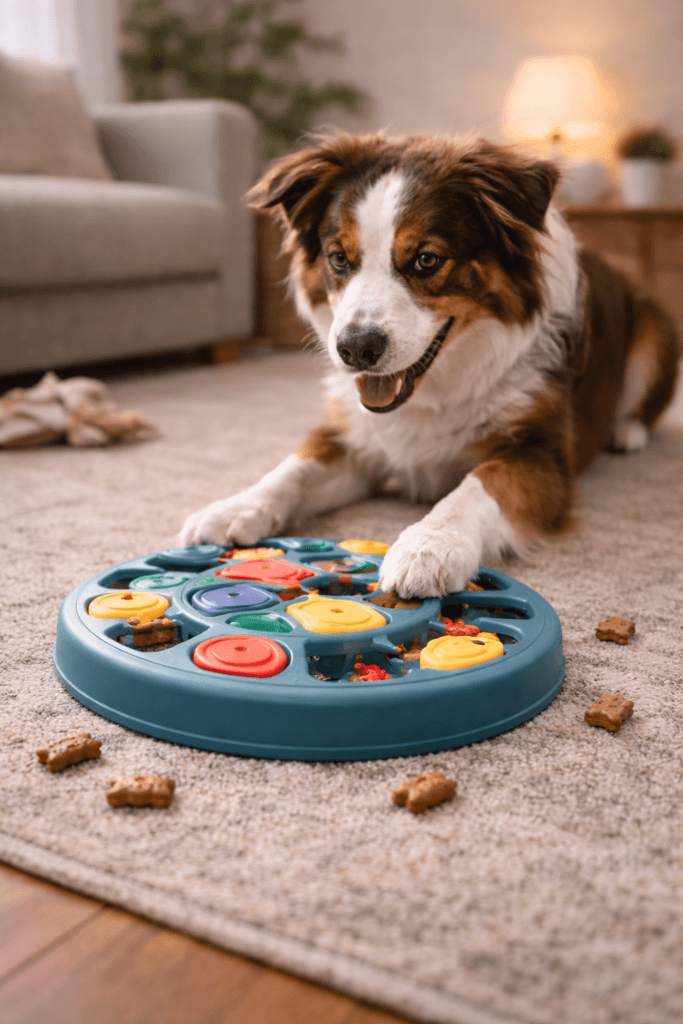
Woofy Guru Paw-sitive Action Step 🐶
Pick one mental activity to try today:
- A puzzle feeder
- A sniff game
- A short training session
- A brain-based enrichment toy
Consistency beats perfection every time.
If this helped you understand your dog a little better, save this post, share it with a fellow dog mom, or drop a 🐾 in the comments so I know you’re part of the Woofy Wisdom pack.
Curious if your dog would enjoy this kind of mental enrichment? Take a look at the official program details and see if it’s a good fit.
Curious if mental stimulation could help your dog feel calmer and more fulfilled?
See How Brain Training for Dogs Works
You’ll be taken to the official website.
Because when your dog thrives… so do you.
Time to Get Woofy. Go Ahead. Show Me Your Dog!